
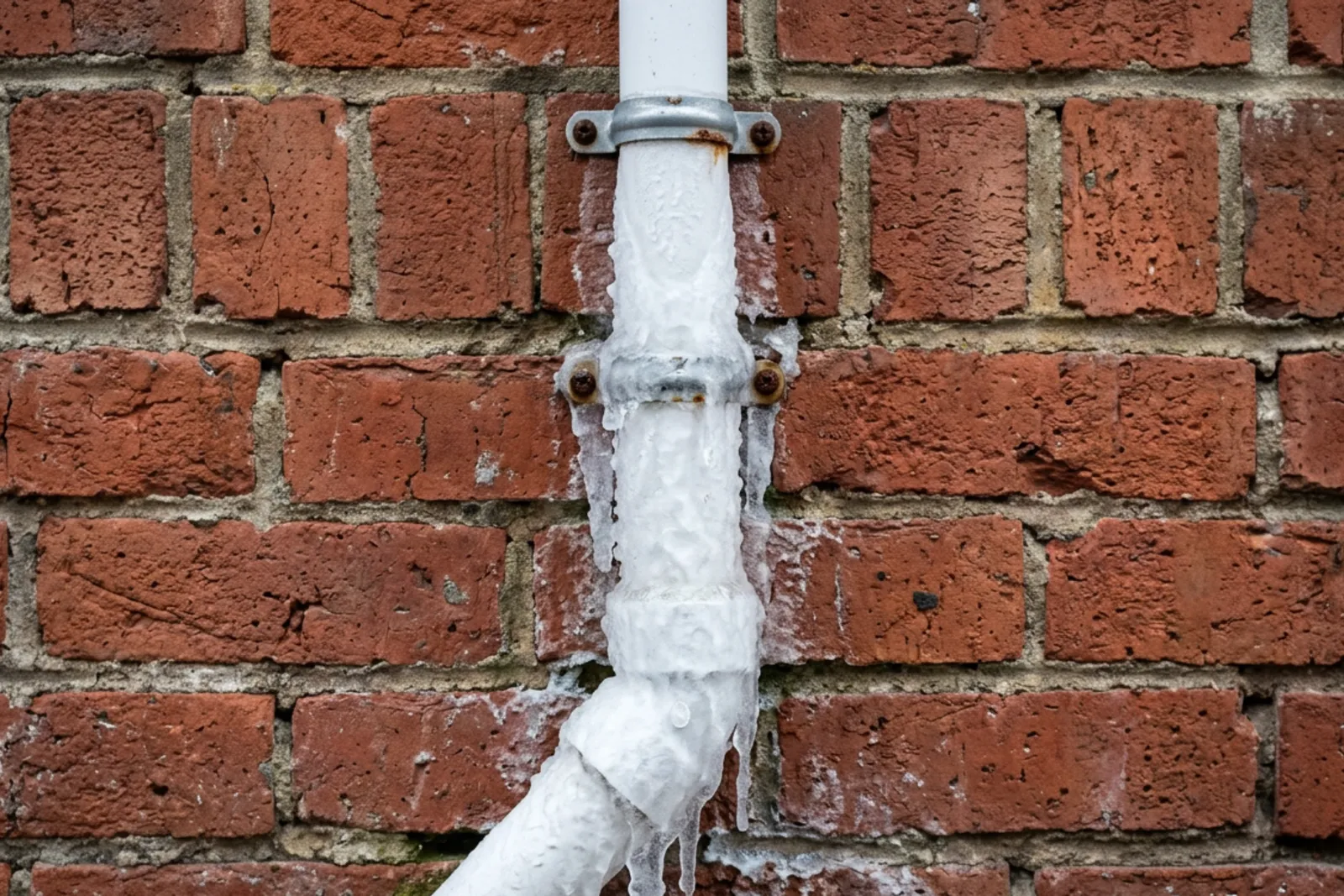
Frozen Condensate Pipe? A Safe Guide to Cold-Weather Boiler Lockouts
A frozen condensate pipe can trigger a boiler lockout. Learn what to check safely during a cold snap, when to stop troubleshooting, and when to call a professional.
October 5, 2026
A boiler that stops working overnight during a cold snap can leave you with a chilly house and a confusing fault code. If you have a condensing boiler, one possible cause is surprisingly simple: ice in the condensate drain.
That small plastic pipe carries wastewater away from the boiler. When an exposed section freezes, the blockage can stop the appliance from operating. Your radiator heating or in-floor heating may go cold even though the boiler itself has not suffered a major failure.
A frozen drain is worth checking during below-freezing weather, particularly when the pipe runs outdoors. But timing alone is not a diagnosis. Other boiler faults can cause similar symptoms, and some situations require immediate evacuation rather than troubleshooting.
Here is how to recognize a possible condensate freeze-up, what you can safely do yourself, and when to leave the work to a licensed professional.
Why a Small Drain Can Shut Down the Heating
Condensing boilers recover heat from their exhaust gases that older, non-condensing appliances would send outside. As those gases cool, some of the water vapor becomes liquid. This liquid, called condensate, is mildly acidic and needs to drain through suitable pipework.
The condensate usually passes through a trap and then into a drainage connection. Depending on the installation, part of that route may run along an exterior wall or through an unheated space.
During freezing weather, water can turn to ice inside those exposed sections. The risk increases where the pipe sags, changes direction, or ends in a location where ice can build up.
Once the drain becomes blocked, condensate backs up toward the boiler. Depending on the appliance, its controls may detect the drainage problem directly or register an associated operating fault. The boiler then locks out, preventing normal burner operation.
The result can be a complete loss of heat. A boiler that also supplies domestic hot water may stop providing that, too.
Cold snaps around Greater Vancouver and the North Shore can expose weaknesses in installations that drain normally throughout milder weather. A pipe does not have to freeze every winter to be vulnerable. A longer or colder freeze may be enough.
Check the Clues Before Assuming It Is Ice
A frozen condensate pipe is more likely when the boiler stops during or shortly after a hard frost. An overnight shutdown, combined with an outdoor plastic drain, makes it a reasonable possibility.
Other clues include gurgling near the boiler or drain, a fault code on the display, and water weeping or leaking from the appliance. Gurgling may occur while condensate tries to pass a partial blockage. Leakage can occur when backed-up water escapes instead of reaching the drain.
None of these symptoms proves that the pipe is frozen.
Fault codes vary by manufacturer and model. A code associated with ignition, drainage, or another operating condition may appear during a condensate blockage. A low-water or low-pressure warning can also indicate a separate heating-system problem. Check the boiler manual rather than relying on a generic online fault-code explanation.
Look at the drain route, without opening the boiler
If you can identify the condensate pipe confidently, follow its visible route. It is generally plastic, but its size, color, and connection arrangement vary.
Look for exposed outdoor sections, elbows, an open termination, and places where the pipe appears to sag. These are common trouble spots because they either lose heat quickly or allow water to collect.
For example, a pipe might leave a warm utility room, cross an exterior wall, and turn downward through an elbow. That elbow may freeze even while the indoor section stays warm. Ice at the outlet can also restrict drainage farther upstream.
Keep the inspection visual. Do not disconnect pipework, remove the boiler casing, or insert tools into a drain opening. If you cannot distinguish the condensate drain from other pipes, stop and ask a professional.
A shutdown in mild weather deserves a broader diagnosis. Treating every lockout as frozen condensate can delay the repair the boiler actually needs.
Know When Troubleshooting Must Stop
A fault display and a cold house are frustrating. A gas odor or carbon monoxide alarm is an emergency.
If you smell gas or a carbon monoxide alarm sounds, leave the home immediately. Do not attempt a reset or inspect the boiler. Avoid operating electrical switches or creating flames, and make emergency calls once you are outside and away from the suspected hazard.
Call the local gas utility’s emergency line or 911, as appropriate. Do not re-enter until emergency responders say it is safe. Arrange an assessment by a licensed heating professional after the immediate danger has been addressed.
Persistent boiler leakage also needs caution, especially if water is near electrical components. Do not remove covers or touch wet electrical equipment. Keep people away from the affected area and seek professional advice.
For ordinary freeze-up checks, accessibility matters. A section reachable only from a ladder, an icy slope, or a roof is not a safe homeowner thawing job.
How to Thaw an Accessible Outdoor Section
Limited thawing may be reasonable when the suspected blockage is clearly in an outdoor condensate pipe, you can reach it safely from the ground, and there are no emergency warning signs. Follow any model-specific guidance in the boiler manual.
The aim is gentle warming. Plastic drainage pipe does not need aggressive heat, and trying to rush the process can cause damage.
Choose a safe position. Make sure the ground is stable and the pipe can be reached without stretching or climbing. Keep water away from electrical equipment.
Start at the likely frozen point. Concentrate on an exposed elbow, bend, or outlet. If ice is visible at the termination, that may be a useful starting point.
Apply gentle heat. Hold a hot-water bottle against the pipe, wrap it with a cloth soaked in warm water, or slowly pour warm water over the outside.
Allow time for the ice to melt. Refresh the warm cloth or water as needed. Do not hit, twist, or force the pipe.
Check for restored drainage. You may hear water move or see it discharge at an open outlet. These are useful signs, but they do not guarantee the whole drainage route is clear.
Be careful about where the water goes. Water poured over a pipe can freeze on a walkway and create another hazard. Avoid leaving a slippery surface where someone may step.
Never use a blowtorch, naked flame, or boiling water. Flames create fire hazards and can damage nearby materials. Boiling water can damage plastic pipework.
Do not use a heat gun, improvised electrical heating arrangement, or chemical drain cleaner as a substitute. This is a suspected ice blockage, not an invitation to experiment with the boiler’s drainage system.
If gentle warming does not clear the blockage, or you discover cracked pipework, stop.
Reset Once the Drain Is Clear, Then Observe
After thawing, follow the manufacturer’s reset instructions. Different boilers have different controls, so avoid guessing at button combinations or holding a reset button longer than directed.
A successful restart is encouraging. Check that the boiler runs normally, the fault does not return, and no water continues to leak. In a hydronic heating system, radiators and heated floors may take time to warm after the boiler resumes operation. That delay alone does not mean the reset failed.
Repeated resets are a poor substitute for diagnosis. If the boiler locks out again, does not restart, continues to gurgle, or keeps leaking, contact a licensed professional.
The blockage may extend beyond the section you warmed. There could also be a problem with the condensate trap, internal drainage components, or another part of the boiler.
Tell the technician when the shutdown began, what fault code appeared, where the pipe runs, and what you did to thaw it. A photograph of the display and visible outdoor pipework can help. There is no need to open the appliance to gather more information.
Prevent the Next Freeze Rather Than Repeating the Reset
Thawing gets you through the immediate problem. It does not change the conditions that allowed ice to form.
An installation that has frozen once deserves a drainage assessment, even if it works normally after a reset. The most useful repair depends on the route, pipe size, slope, and termination.
Keep the drain indoors where practical
Reducing outdoor exposure is often the most dependable approach. A technician may be able to reroute the condensate to a suitable indoor drainage point.
That connection must meet applicable requirements and the boiler manufacturer’s instructions. Condensate is acidic, so compatible materials and any required treatment matter. Connecting it to the nearest convenient opening is not necessarily acceptable.
Correct the slope and remove standing-water pockets
The drain needs a continuous downward fall appropriate to the installation. A sagging section holds water between boiler cycles, giving ice time to form.
Insulation cannot correct poor slope. Pipe supports, routing, and the outlet arrangement may need changes so condensate drains freely.
The termination also needs attention. An outlet that becomes buried in snow, submerged, or obstructed by ice can block an otherwise well-installed pipe.
Review external pipe size and insulation
A larger external pipe diameter may reduce freezing risk where permitted by the manufacturer and local requirements. The correct size depends on the installation, so it should not be chosen by guesswork.
Weatherproof insulation can slow heat loss from exposed sections. It needs to be suitable for outdoor use and remain protected from moisture and damage.
Insulation buys time; it does not create heat. During prolonged freezing conditions, an insulated pipe can still freeze.
Use trace heating only as a properly designed solution
Where an exterior route cannot be avoided, thermostatically controlled trace heating may be appropriate. The heating product must be compatible with the pipe and installed according to its instructions and electrical requirements.
Wrapping a pipe with an improvised heater is unsafe. A professional should assess whether trace heating is needed and how it will be installed, controlled, and maintained.
Drainage corrections do not automatically mean boiler replacement. A serviceable boiler may simply need a better condensate route. Replacement should follow an assessment of the appliance, not a single winter lockout.
Questions Homeowners Commonly Ask
Can I thaw the pipe without a technician?
Yes, sometimes. Gentle warming of a clearly identified, safely accessible outdoor section is a limited task a homeowner may be able to handle.
Call for help if the section is inaccessible, inside the boiler enclosure, or difficult to identify. Professional attention is also needed if thawing does not restore normal operation.
Will thawing stop a boiler leak?
It may stop leakage caused by backed-up condensate, but that is not guaranteed. A leak may have another cause, or freezing may have damaged the pipe.
Any continuing leak needs assessment. Even if it stops, arrange a drainage review if the boiler overflowed or the problem has happened before.
Does every cold-weather lockout mean the drain is frozen?
No. Ignition problems, pressure faults, electrical failures, and other issues can interrupt heating during cold weather.
Freezing temperatures and exposed condensate pipework are clues, not proof. The boiler manual and a qualified diagnosis are more reliable than the weather alone.
A Safer Plan for the Next Cold Snap
Before freezing weather arrives, check the visible condensate route for damaged insulation, sagging pipework, and an obstructed outlet. Have questionable sections assessed during routine boiler maintenance rather than waiting until the house is cold.
If a lockout occurs, start with safety, then check the timing and visible drain route. Use gentle warmth only on accessible outdoor pipework, reset according to the manual, and stop if normal operation does not return.
The lasting fix is straightforward in principle: give condensate a suitable route that drains freely and resists freezing. Getting that route right is far better than making the same emergency reset every winter.
Wondering how this applies to your house?
Send us the make, model and the symptom, we will tell you straight.
Get a fixed quote