
Can You Keep Old Radiators With a Modern Condensing Boiler?
Can you keep old radiators with a condensing boiler? Learn how heat loss, water temperature, and system upgrades affect comfort and efficiency. Explore what to check.
November 16, 2026
Replacing a boiler does not automatically mean replacing your radiators. Many older radiator systems can work well with a modern condensing boiler, sometimes with only modest adjustments.
The harder question is how efficiently the new boiler will operate. A condensing boiler needs sufficiently cool water returning from the heating system to recover extra heat from its exhaust. If the radiators require very hot water throughout the heating season, some of that efficiency advantage disappears.
That is why a good boiler replacement assessment looks beyond the appliance. Room heat loss, radiator capacity, water temperatures, controls, venting, and drainage all influence the result.
Here is how to judge whether your existing radiator heating system is a good candidate, and when targeted upgrades make sense.
Why Return-Water Temperature Matters
Burning natural gas produces heat, water vapor, and other combustion gases. A conventional non-condensing boiler transfers some of that heat into the heating water, then sends relatively hot exhaust through its vent. The water vapor leaves with the exhaust, taking usable energy with it.
A condensing boiler has a heat exchanger designed to recover more of that energy. When the exhaust cools enough, some water vapor turns into liquid. That change releases latent heat, which the boiler can transfer into the heating system.
For natural gas, condensation generally begins when the heat exchanger surfaces are below the exhaust’s dew point, commonly around 55°C (131°F). Return-water temperature is a useful practical indicator: cooler water coming back from the radiators makes condensation more likely.
This is a gradual effect, not an on-off efficiency switch. A return temperature just below 55°C does not guarantee the boiler’s highest rated efficiency. Lower return temperatures generally allow more heat recovery, while firing rate and other operating conditions also matter.
The resulting condensate needs a proper drain. Unlike an older non-condensing boiler, the replacement appliance must have a planned route for this water.
Old Radiators Are Not Automatically the Problem
Many older hydronic heating systems were designed around high water temperatures, sometimes approximately 80°C (176°F) at the supply. That does not prove they need those temperatures every day.
The original radiators may be larger than necessary. The house may also have changed since installation. Attic insulation, air sealing, or better windows can reduce room heat loss, leaving the existing radiators with capacity to spare.
Weather matters, too. A system that needs hot water during the coldest conditions may heat the home comfortably with much cooler water during milder weather. In a relatively mild coastal climate such as the North Shore, those part-load conditions deserve attention.
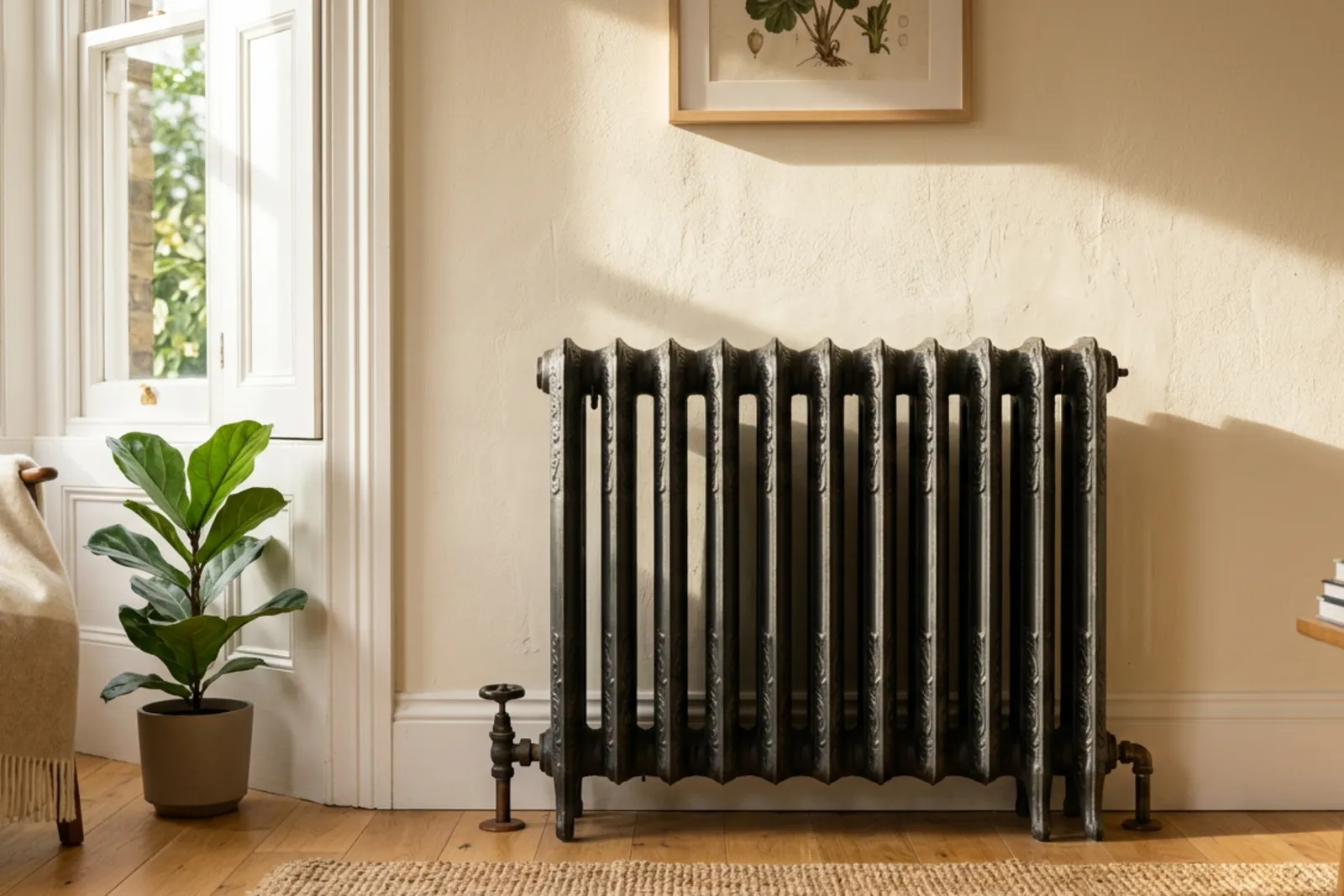
The useful distinction is between a radiator’s age and its output. An old cast-iron radiator can be suitable for low-temperature operation if it is large enough for the room. A newer, smaller radiator may struggle under the same conditions.
Condition still matters. Leaks, corrosion, blocked passages, unreliable valves, and unsuitable pipework can affect reuse. But age alone is a poor reason to remove a functioning radiator system.
Start With a Room-by-Room Heat-Loss Calculation
The most useful starting point is a heat-loss calculation, not the capacity printed on the old boiler.
A room-by-room assessment estimates how much heat each space needs at the local winter design temperature. It considers room dimensions, insulation, windows, air leakage, and exposure to outdoor conditions or unheated spaces.
The next step is comparing that demand with radiator output at proposed water temperatures.
Cooler water means less radiator output
A radiator transfers heat because its surface is warmer than the room. Lower the water temperature and that temperature difference shrinks. The radiator still heats, but its output falls.
Radiator ratings therefore need context. A published output may assume water substantially hotter than the proposed operating temperature. The designer should use manufacturer data or appropriate correction methods rather than treating the listed output as constant.
For example, suppose a room needs 1,400 watts on the design day, but its radiator can provide only 1,000 watts at the intended lower water temperature. That room has a shortfall even if every other room is adequately heated.
Possible responses include increasing radiator capacity, adding another emitter, or reducing the room’s heat loss. The right answer may be a targeted change rather than whole-house replacement.
Boiler sizing is a separate calculation
The new boiler also needs to match the building’s heating demand. Copying the old boiler’s size can preserve decades of oversizing.
Minimum output matters as well as maximum capacity. If the smallest firing rate is too high for mild-weather demand, the boiler may repeatedly start and stop. This short cycling can reduce efficiency and increase component wear.
Where the boiler also heats domestic hot water, that demand needs separate consideration in equipment selection and control design.
How to Help Existing Radiators Run at Lower Temperatures
Once the calculations establish what is possible, system adjustments can help turn that potential into reliable comfort.
Balance the system before raising the temperature
Poor flow distribution can make a heating system look undersized. Some radiators receive too much water while distant rooms remain cold. Raising the boiler temperature may warm the problem room, but it can overheat the rest of the house.
Hydronic balancing adjusts distribution so each circuit or radiator receives appropriate flow. Depending on the system, this may involve valve adjustments, pump settings, or piping corrections.
The goal is suitable flow, not simply the lowest possible return temperature. Restricting circulation too far can reduce radiator output or interfere with boiler operation. Flow and temperature difference need to suit both the appliance and the heating system.
Use controls that respond to demand
Outdoor reset adjusts the boiler’s target water temperature according to outdoor conditions. Mild weather calls for cooler water; colder weather allows a higher target.
This can increase the portion of the heating season spent condensing without asking the radiators to heat the house with low-temperature water during every cold snap.
Thermostatic radiator valves and suitable zoning controls can also improve room comfort. However, the design must account for what happens when valves close or only a small zone calls for heat. The boiler still needs appropriate flow and enough active heating load.
A practical commissioning goal is the lowest supply temperature that reliably maintains comfort under the conditions present, with controls set to respond properly as the weather changes.
What Efficiency Ratings Really Tell You
AFUE, or Annual Fuel Utilization Efficiency, estimates the proportion of fuel energy converted into useful heat over standardized annual operating conditions.
Broad reference ranges include:
Boiler categoryApproximate AFUEOlder cast-iron non-condensing boiler65% to 75%Modern non-condensing boiler80% to 84%Entry-level condensing boiler90% to 92%Higher-efficiency condensing boiler95% to 98%
These are general comparisons, not a way to determine an individual boiler’s performance. Some older boilers have different ratings, and a nameplate rating does not measure the current condition of an aging appliance.
A condensing boiler operating with consistently hot return water cannot recover as much latent heat. Its actual operating efficiency may fall well below its advertised rating. There is no single reduced efficiency figure that applies to every high-temperature installation.
AFUE also does not describe every household energy cost. Pump electricity, distribution losses, thermostat settings, maintenance, and installation quality affect the overall result.
A realistic savings example
Suppose a home spends $1,500 annually on gas used specifically for space heating, and the existing boiler operates at 75% seasonal efficiency.
If the replacement actually achieves 96% seasonal efficiency while supplying the same useful heat, the estimated new heating cost is:
$1,500 × 0.75 ÷ 0.96 = approximately $1,172
The theoretical saving is about $328 per year.
That calculation assumes unchanged fuel prices and heating demand. If operating temperatures prevent the new system from achieving the assumed seasonal efficiency, savings will be lower. A whole-house gas bill that includes cooking or domestic hot water should not be used as though it were entirely a space-heating expense.
Venting and Condensate Can Determine What Is Practical
Radiator compatibility is only part of the conversion. A condensing boiler also needs suitable exhaust venting, combustion air, and condensate disposal.
The existing chimney may need changes
Older non-condensing boilers commonly use metal vents or masonry chimneys designed for hot exhaust and natural draft.
Condensing exhaust is cooler and moisture-laden. An old vent cannot be assumed suitable: it may not maintain appropriate draft, and condensation can damage materials not designed for that service.
New venting must follow the appliance’s certification, manufacturer instructions, and applicable local requirements. Approved systems may use specified plastic, polypropylene, or stainless steel materials, depending on the appliance and jurisdiction.
Many modern residential condensing boilers use sealed combustion with outdoor combustion air. The intake and exhaust routes need acceptable termination locations and required clearances. A chimney shaft may sometimes provide a route for an approved vent system, but that is different from reusing the old flue unchanged.
Condensate needs a deliberate drainage plan
Boiler condensate is mildly acidic. The installation may need a neutralizer, a condensate pump, or both, depending on drainage arrangements and requirements.
Drain routing also needs protection against freezing and provision for maintenance. A small pipe is easy to overlook during planning, but a blocked condensate drain can shut the boiler down.
Heritage restrictions, difficult exterior access, and remote installations can complicate these details. They should be investigated before equipment is selected.
Compare Installed Costs, Not Just Boiler Prices
The price difference between two boilers does not tell you the difference between two completed installations.
A conversion may require new venting, electrical work, drainage, controls, pumping changes, or selected radiator upgrades. In another home, much of the existing system may be reusable.
Written estimates are most useful when they clearly identify scope, including permits, disposal, startup, and boiler commissioning. That makes comparisons more meaningful than a single equipment price.
Rebates can affect the calculation, but they should be treated as conditional until eligibility is confirmed. For a project in British Columbia, check any applicable FortisBC rebate requirements, including equipment eligibility, application timing, and installation conditions. Do not assume that an earlier program remains available.
Simple payback is straightforward: divide the additional net installed cost by estimated annual savings. For example, an extra $1,000 divided by $300 in annual savings gives roughly 3.3 years.
That is a hypothetical calculation, not a promised outcome. Maintenance costs, actual operating efficiency, fuel rates, and equipment life all affect long-term ownership costs. Comparisons should also use the realistic alternative replacement, rather than mixing savings against an old boiler with the added cost over a new non-condensing unit.
What a Useful Compatibility Assessment Should Include
Before approving a replacement, ask for a clear explanation of:
Each room’s heat loss and radiator output at the proposed water temperatures.
Any radiator, piping, balancing, or control changes needed.
Boiler sizing, minimum firing rate, and expected supply and return temperatures.
Approved venting, combustion-air, and condensate arrangements.
Applicable permits, code requirements, and commissioning work.
Gas appliance installation should be handled by appropriately licensed professionals. In British Columbia, the permitted replacement options and current requirements need confirmation for the particular project.
Emergency replacement can shorten the time available for planning. Even then, checking the basic heating load, vent route, and drainage arrangement helps prevent avoidable compromises.
Keep What Works, Change What the Calculations Support
A modern condensing boiler can often work successfully with legacy radiators. The strongest installations begin by finding out how much heat the home needs and how cool the heating water can reasonably be.
Some homes can keep nearly everything. Others need a larger radiator in one room, better balancing, or revised controls. A few require broader hydronic changes to make low-temperature operation practical.
The decision should follow the evidence. Keep radiators that can do the job, correct the parts that limit performance, and make sure the new boiler is installed and commissioned for the system it will actually serve.
Wondering how this applies to your house?
Send us the make, model and the symptom, we will tell you straight.
Get a fixed quote